From an Osaka cash-register shop to the slot floor's bill validator
Models we carry
Add units to your quote list across brands, compare up to three side by side, or open any machine’s spec sheet. Confirm the exact configuration with us before you buy.
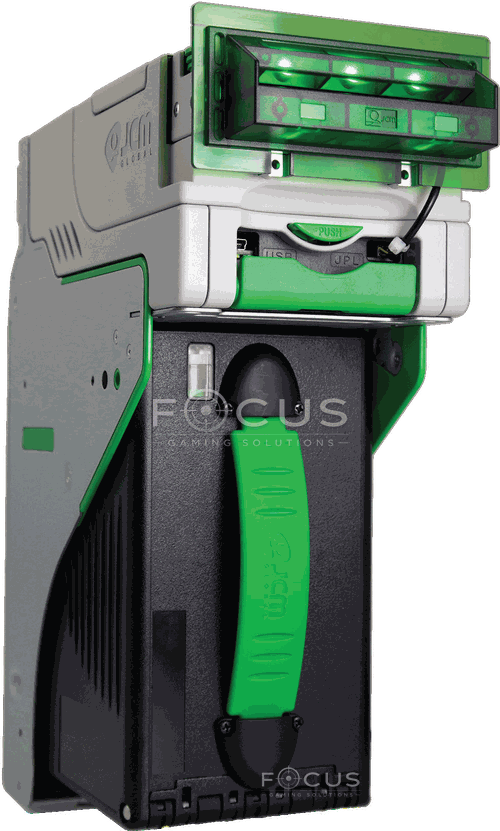
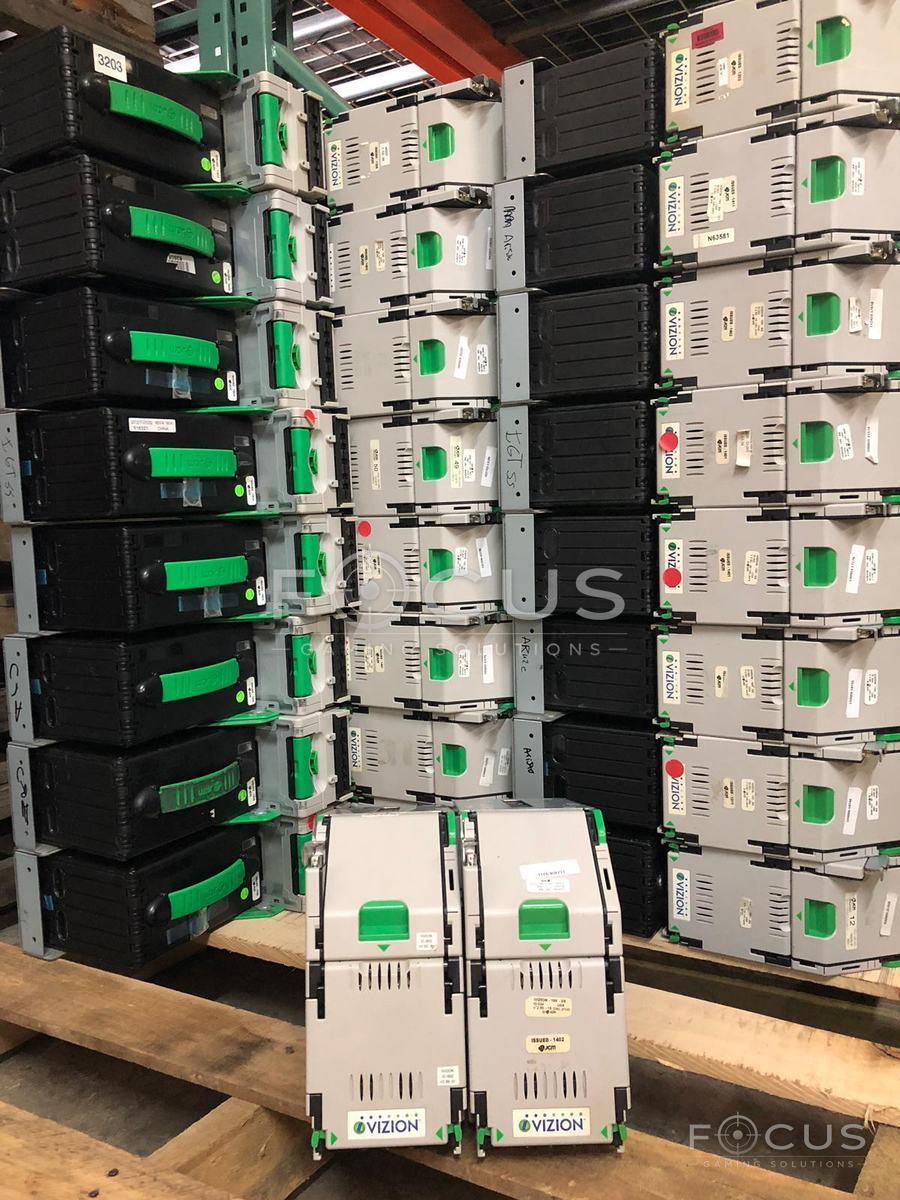
Instead of reading a handful of narrow tracks, iVIZION images the full face of every note and ticket, front and back, with a contact image sensor. That is how JCM backs its stated acceptance rate of 99 percent or better. Notes ride an 85 mm sealed path that keeps out dust and spilled drinks, and every cash box is an RFID-tagged Intelligent Cash Box, so the count room knows which machine it came from. Focus supplies iVIZION units for slot refits and replacements.
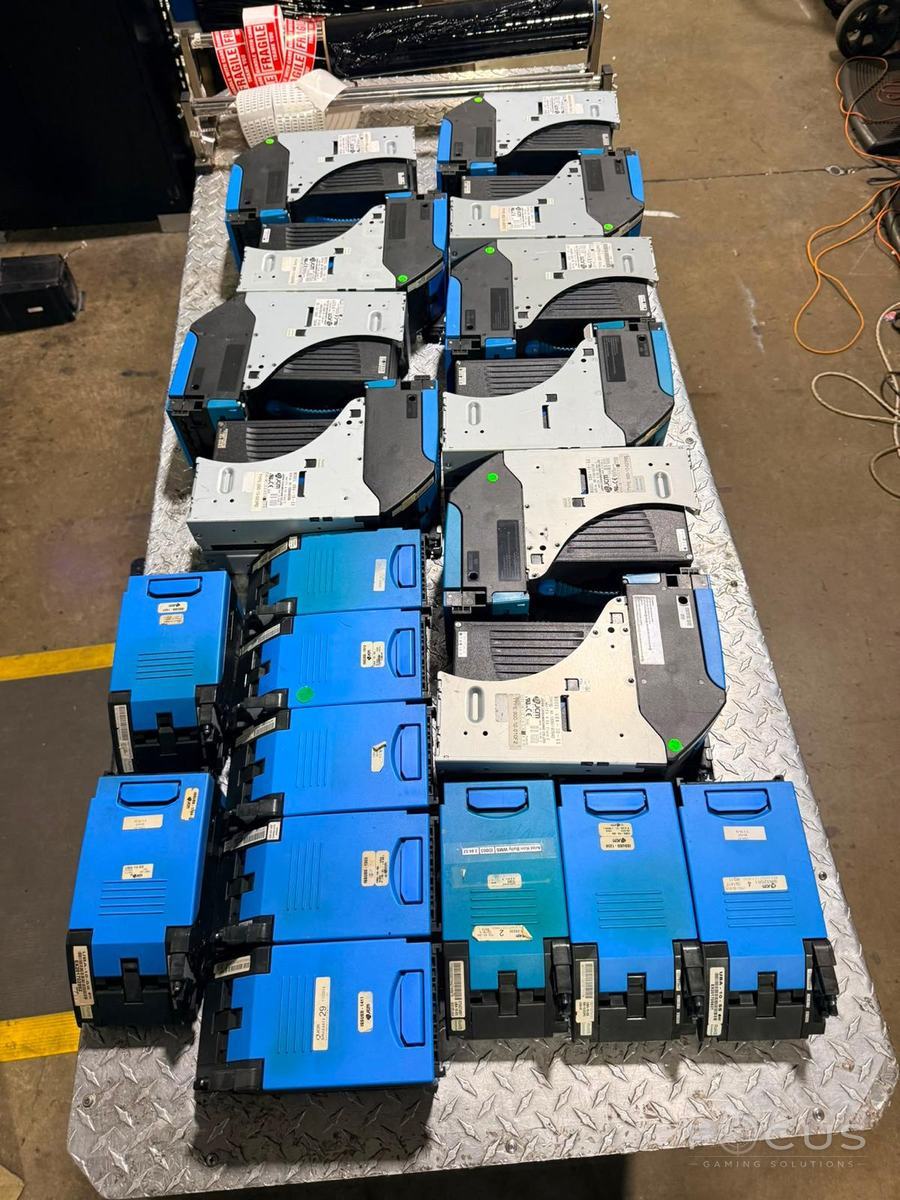
JCM's UBA (Universal Bill Acceptor) checks each note with magnetic and optical sensors and a mechanical guard against notes pulled back out on a string, reads TITO barcode tickets, and takes notes 62–85 mm wide in several currencies at once with no software change. Validation takes about 2 seconds, a rejected note gets an automatic second try, and notes stack into a plastic cash box of about 600 (1,000 optional). The UBA-10 has 8 Mb of memory and RS-232C as standard.
Validation
About 2 s per note, stacked in about 4 s; automatic retry when a note is rejectedMFR
Notes and tickets
US and international notes 62–85 mm wide, 120–165 mm long; several currencies at once; TITO barcode ticketsMFR
Cash box
About 600 notes (1,000 optional), plastic, with a visual audit windowMFR
Interfaces
Serial (photocoupler, RS-232C, ccTalk) or USB 2.0; RS-232C standard on the UBA-10MFR
Protocols
ID-003 (serial), ID-008 and ID-0G8 (USB), OEM ID-024/028MFR
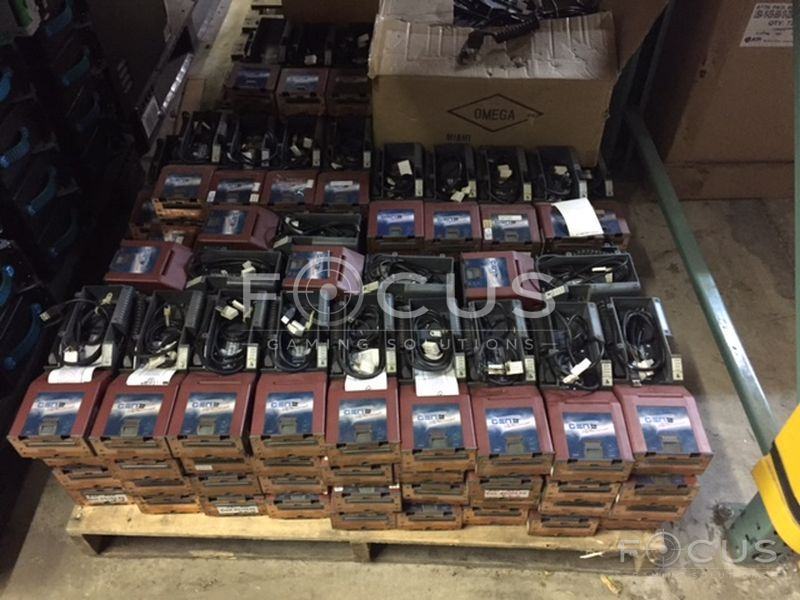
FutureLogic's GEN2 Universal is a thermal TITO ticket printer for slot machines; JCM Global bought FutureLogic in 2014. It prints near the edge of a 66 mm ticket at 203 dpi, presents a ticket in about 2.2 seconds, holds 300 tickets (600 or 900 with tray extenders) and can add a second colour, red or blue, to the black.
Printing
Direct thermal, 203 dpi, 62 mm print width, near-edgeMFR
Speed
90 mm/s; about 2.2 s to print and present a ticketMFR
Tickets
300 in the tray; 600 and 900-ticket tray extendersMFR
Source tags: MFR = the manufacturer's published documents · REG = a regulator's document · press / dealer = not yet confirmed by the manufacturer.
1955Founded in Osaka, Japan
1990First validators in U.S. casinos
Las VegasU.S. headquarters
2009iVIZION unveiled at G2E
About JCM Global
JCM started in Osaka in January 1955 as Japan Cash Machine, a firm that sold and repaired cash registers. Within two years it was building its own machines, it moved to electronic registers in the 1970s, and in 1981 it produced its first validator for Japanese yen. Validators for the U.S. dollar and the Deutsche Mark followed in 1986.
The U.S. company, JCM American Corporation, was set up in 1988, and JCM validators were going into American casinos by 1990. In the early 1990s JCM worked with IGT to put its validators inside IGT video lottery terminals, and the company credits its embedded validator, with a lockable cash box that slides out for the count room, with making bill acceptance a standard part of the slot cabinet. A JCM executive also describes the company drafting the barcode-ticket format with MGM and IGT around 2000, the groundwork for ticket-in, ticket-out.
JCM bought ticket-printer maker FutureLogic in 2014, opened a factory in Laguna, Philippines, in 2020, and marked its 70th year in 2025. Its American headquarters is on Pilot Road in Las Vegas.
Key dates
1955Japan Cash Machine is founded in Osaka.
1981First bill validator, built for the Japanese yen.
1988JCM American Corporation is established.
1990First JCM validators installed in U.S. casinos.
2009iVIZION shown for the first time at G2E in Las Vegas.
201210,150 iVIZION units installed across five new casinos in 30 days.
Specifications come from published manufacturer and trade-press sources; confirm the exact configuration of any unit with us before you buy. Brand names and logos belong to their respective owners.